
Review · COOKING CLASSES
Slovenia: Belokranjska Pogača Cooking Class
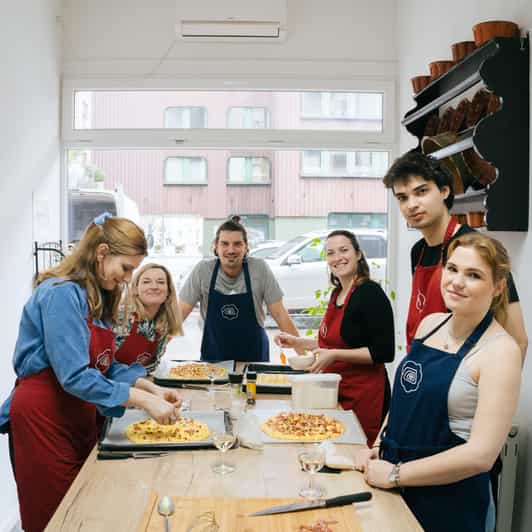
Fresh bread makes a fine souvenir. This two-hour Belokranjska Pogača cooking class turns a traditional Slovenian bread into a hands-on cultural experience, not just a quick demonstration. I like the small-group format, limited to 10 people, and I like that Luka adds stories about Slovenia, its people, and its past while the dough rests. The class also includes the ingredients, equipment, baking, and tasting, so you leave with both a skill and a meal.
The main consideration is the meeting point. It is in a small square with a broken concrete fountain, and the entrance can be reached through a passage near the bus stop or past a Chinese restaurant near the old church. The directions are specific but not instantly obvious, so allow extra time to find the big clear window. Afternoon parking requires a call to Luka, while free spaces may be available behind the building in the morning.
In This Review
- Key points at a glance
- Why Belokranjska Pogača matters in Slovenia
- Finding the small square and clear-window shop
- What happens when the class begins
- Kneading, rolling, and shaping the dough
- The waiting time becomes part of the lesson
- Tasting your own golden Pogača
- How personal is the instruction?
- Is $53 a fair price?
- Who will enjoy this cooking class most?
- Booking details worth knowing
- Should you book the Belokranjska Pogača class?
- FAQ
- How long does the Belokranjska Pogača cooking class last?
- How much does the cooking class cost?
- What language is the class taught in?
- How many people can join the class?
- Is the cooking class wheelchair accessible?
- What is included in the price?
- Where is the meeting point?
- Can I cancel or pay later?
Key points at a glance
- Belokranjska Pogača is more than ordinary bread: You learn about a savory specialty from Slovenia’s Bela Krajina region and its place in local family life.
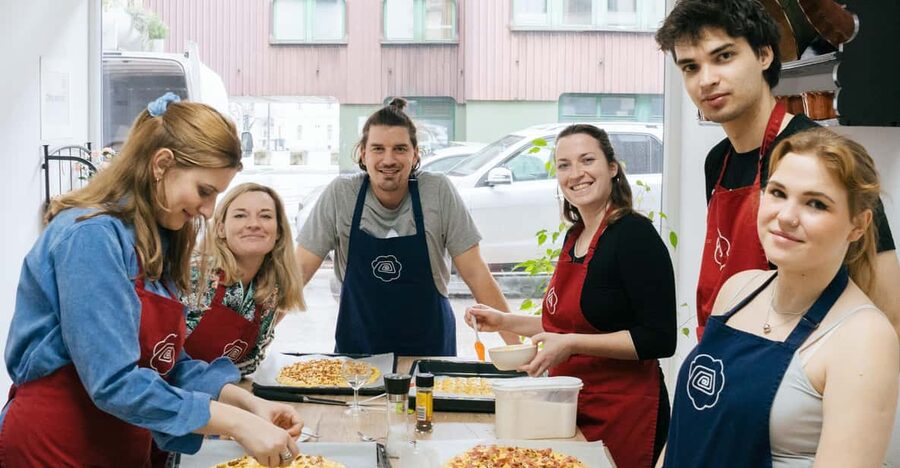
- Luka teaches by doing: You knead, roll, shape, and bake the dough instead of simply watching from the side.
- The waiting time has a purpose: While the yeast proves, the dough rises, and the bread bakes, Luka talks about Slovenia and pours Slovenian wine.
- Small groups keep it personal: With no more than 10 participants, the class has room for questions and individual guidance.
- Families can fit comfortably: One highly positive account specifically praised Luka’s way with children and teenagers.
- The price covers the full activity: At $53 per person, you receive instruction, ingredients, equipment, drinks, and your own freshly baked bread.
Why Belokranjska Pogača matters in Slovenia
Belokranjska Pogača comes from Bela Krajina, a southeastern part of Slovenia known for its distinct food traditions. It is a savory, rustic bread with a soft interior and golden crust, made to be shared rather than admired from a bakery window.
I like classes built around one local dish because they give you a useful key to a place. You learn what people eat, how food moves through families, and why a simple recipe can carry a sense of belonging. Here, the bread represents unity, celebration, and everyday hospitality.
This is not a broad Slovenian cooking course with five unrelated dishes. The focus stays on one specialty, which gives you time to understand the process properly. You can pay attention to the texture of the dough, the timing of the yeast, and the way the finished bread should look and taste.
The class also connects food with geography. Bela Krajina is not just a name attached to the recipe. It is the home region that gives the bread its identity. If you are visiting Ljubljana or central Slovenia, the class offers a small but meaningful connection to a part of the country you may not otherwise get to know.
More cooking classes:
- Ljubljana: Traditional Slovenian štrukelj Cooking Class
★ 4.9 · 58 reviews - sLOVEnian Strukelj Traditional Cooking Class
★ 4.0 · 10 reviews - Private Mediterranean Fish Cooking Workshop with Irena
★ 5.0 · 118 reviews
Finding the small square and clear-window shop
The meeting point takes a little practical attention. Once you reach the area, look for a small square surrounded by buildings. A broken concrete fountain sits in the middle, which is the most useful landmark.
There are two routes into the square. You may pass a Chinese restaurant near the old church, or use a narrow passage through a building near the bus stop. The shop is identifiable by its large clear window.
I would not arrive at the last minute and assume the entrance will announce itself. The directions are workable, but this is not a large tourist attraction with a prominent sign. Give yourself a few extra minutes to locate the fountain and window.
Parking depends on the time of day. In the morning, free spaces may be found on the platform behind the building. In the afternoon, call Luka for help. He uses WhatsApp, so a phone with messaging access is useful if you are driving.
The location is also easy to reach from the city center by bus, according to one participant who attended alone. That makes this a practical choice if you do not have a car.
What happens when the class begins
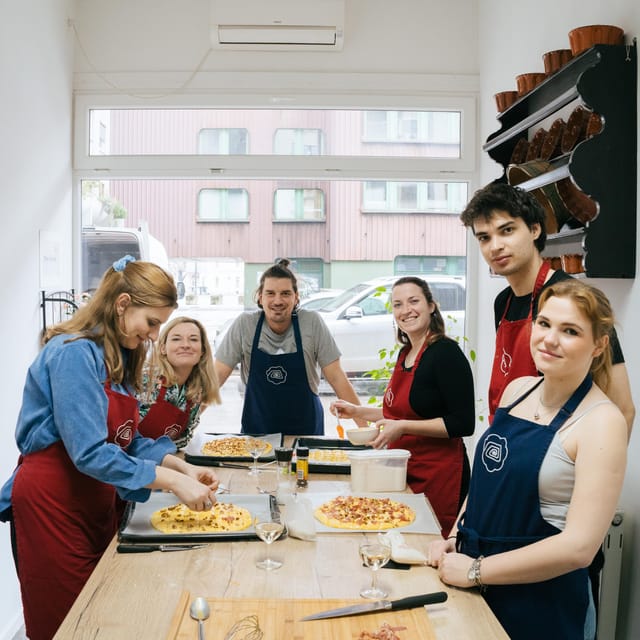
The class starts with an introduction to Belokranjska Pogača and its place in Slovenian cooking. You gather around a large kitchen table, where the instructor explains the dish before the practical work begins.
That opening matters. If you simply made bread without context, you would leave with a tasty result but less understanding of why this particular bread deserves attention. The introduction gives the recipe a place in Slovenian culture and helps you notice the traditions behind the ingredients and method.
The class is offered in English and Slovenian. The available comments describe Luka as warm, welcoming, and easy to converse with in English. One participant also appreciated that the conversation moved beyond cooking into Slovenia’s past, people, and physical setting.
I would expect the tone to be relaxed rather than formal. The class has a maximum of 10 people, and the instruction is designed for active participation. If you have questions, this is the kind of format where you can ask them without holding up a large tour group.
Kneading, rolling, and shaping the dough
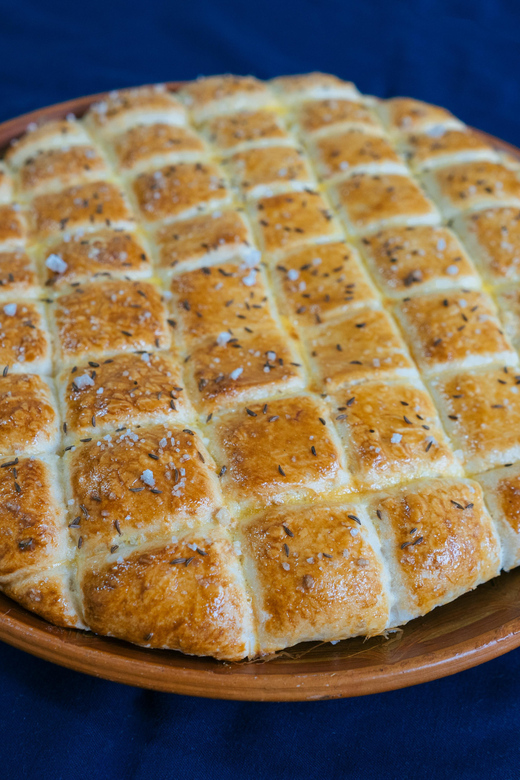
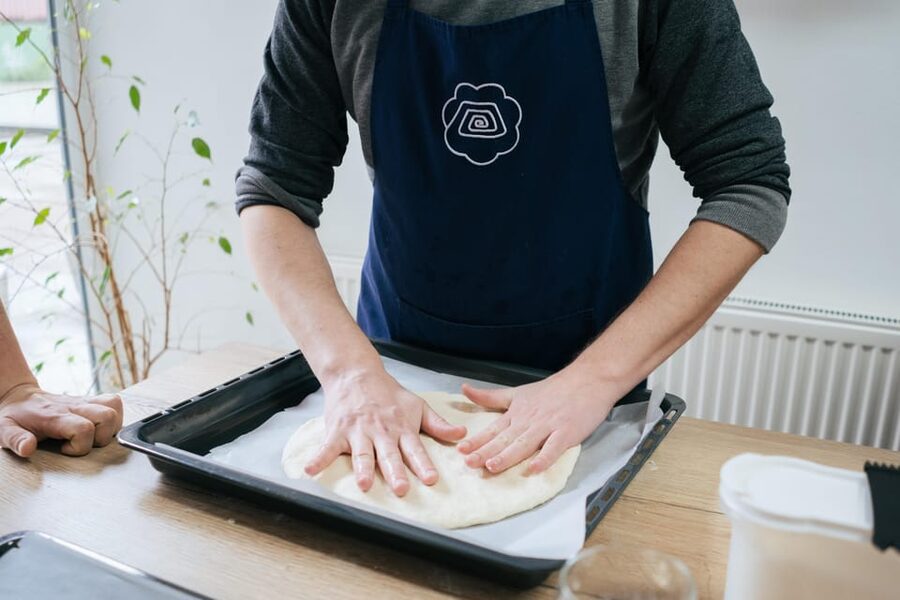
After the introduction, you put on an apron and begin the hands-on work. You knead the dough, roll it, and shape it under the instructor’s guidance.
This is where the class earns its keep. Bread looks simple until you have to judge its texture and handle it correctly. The instructor’s help allows you to work through those small decisions rather than guessing at home from a recipe.
You are not expected to arrive as an experienced baker. The process is explained step by step, and one participant said the clear instructions made the finished bread feel like an accomplishment. That is a good sign for beginners, families, and anyone who enjoys practical activities but does not normally bake.
The ingredients and equipment are included, so you do not need to shop for supplies or worry about carrying special tools. You can concentrate on the dough and the experience.
The description refers to fragrant herbs as part of the process, along with the soft dough and savory flavor. The finished bread has a crusty exterior and tender texture. It is made for tearing and sharing, which fits the social feel of the class.
More hands-on workshops:
- Ljubljana Stand-Up Paddle Boarding Lesson and Tour
★ 5.0 · 281 reviews - Ljubljana: Interactive Workshop with Experienced Weaver
★ 5.0 · 3 reviews - Lake Bled Stand-Up Paddle Boarding Lesson and Tour
★ 5.0 · 155 reviews - Everyday Yoga Class, Soča (Bovec)
★ 5.0 · 9 reviews
The waiting time becomes part of the lesson
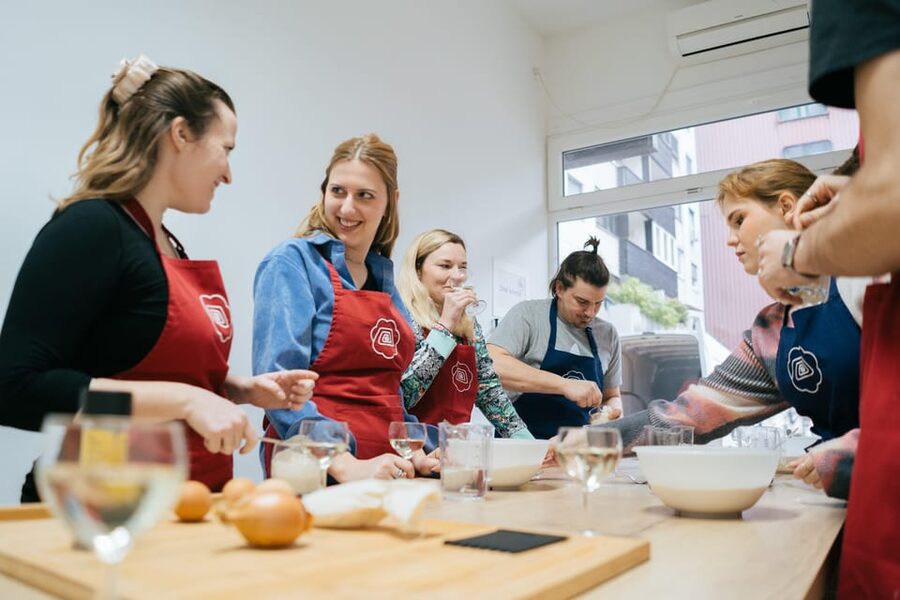
Bread needs time. The yeast must prove, the dough must rise, and the shaped Pogača must bake. Rather than treating those pauses as dead time, Luka uses them for conversation.
This is one of the class’s strongest features. You may taste Slovenian wine while hearing about the country, its past, and its physical setting. The wine is not listed as the central product of the class, but participant accounts specifically note that drinks were offered and that the conversation added another layer to the afternoon.
I value this sort of informal exchange because it gives you a chance to ask the questions that do not fit into a standard sightseeing talk. You can talk about food, local life, and the country more broadly while your bread develops in the oven.
The pace also helps the experience feel less rushed. A two-hour class is long enough for the bread process and conversation without taking up an entire day. You get a complete activity, but you still have time afterward for other plans.
Families should take note. One account specifically praised Luka’s ability to work with children and teenagers. That suggests the class can suit a family group, especially if young participants enjoy mixing, shaping, and eating what they make.
Tasting your own golden Pogača
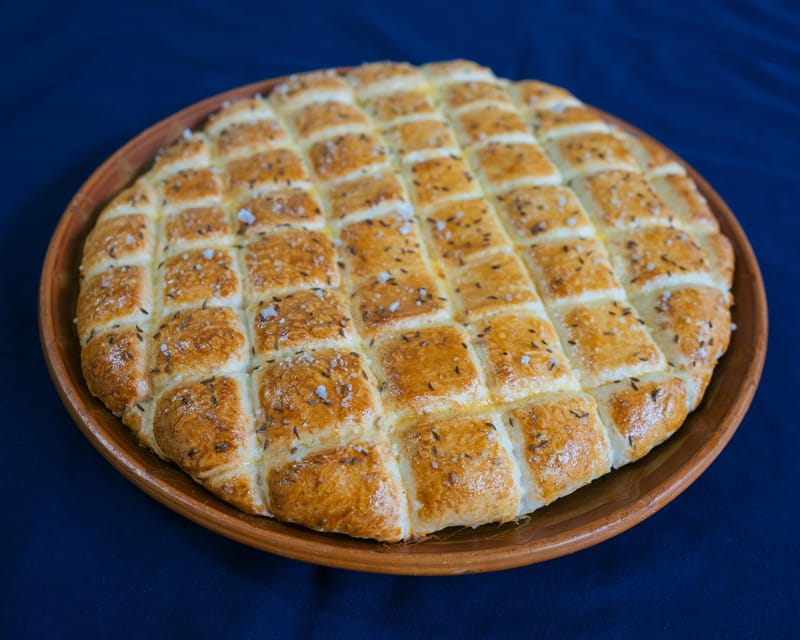
The final stage is the best part for many people: you eat the bread you made. The Pogača comes out warm, with a golden crust and a soft middle. You can taste the herbs and the savory dough while the bread is still fresh.
I like the fact that the class ends with a clear result. Some cultural activities leave you with photos and a vague memory of information. Here, you have a dish that you helped create, and you can try making it again later.
The bread is also an easy way to share the experience with someone else. Tear it apart at the table, compare the shape and crust, and enjoy the small satisfaction of making something together. The social element is not an extra charge or a forced performance. It comes naturally from the food.
Do not expect an elaborate multi-course meal. The focus is Belokranjska Pogača, and the reward is the bread itself, along with drinks and conversation. If you want a large tasting menu, this is not the right activity. If you want a local recipe you can understand and repeat, it is a better fit.
How personal is the instruction?
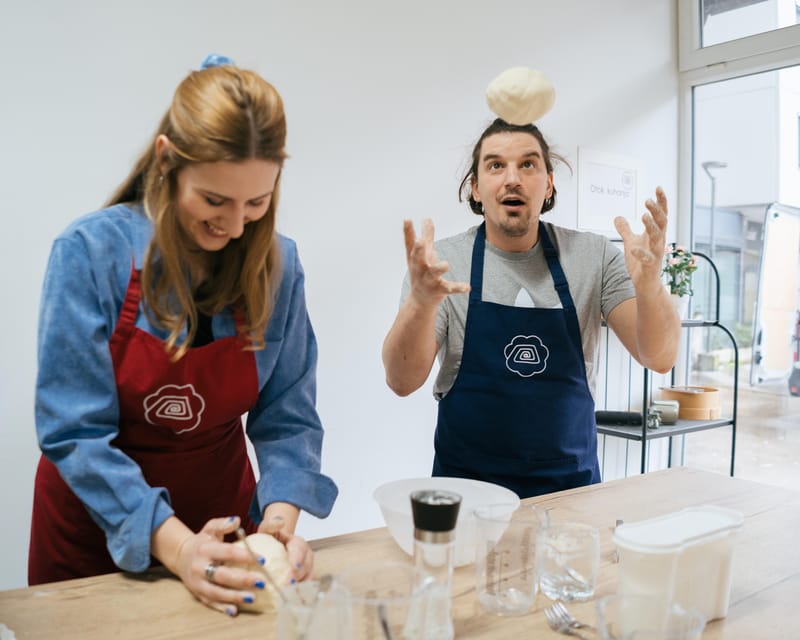
The group limit is 10 people, but the class can be even smaller. One participant booked alone and received what amounted to a private class.
That matters if you prefer personal attention. You can ask about technique, local food, or Slovenia without competing with a large crowd. It also means the experience may feel different depending on the number of bookings, but the stated limit keeps the maximum manageable.
The instructor’s approach receives particularly strong praise. Luka is described as a great host who explains the method clearly and speaks excellent English. His ability to discuss a wide range of topics adds value for people who enjoy conversation as much as cooking.
At the same time, the experience is not presented as a professional baking course. You learn one traditional bread, guided by an experienced host. I would book it for cultural insight and a fun practical lesson, not for advanced pastry training or a certificate.
Is $53 a fair price?
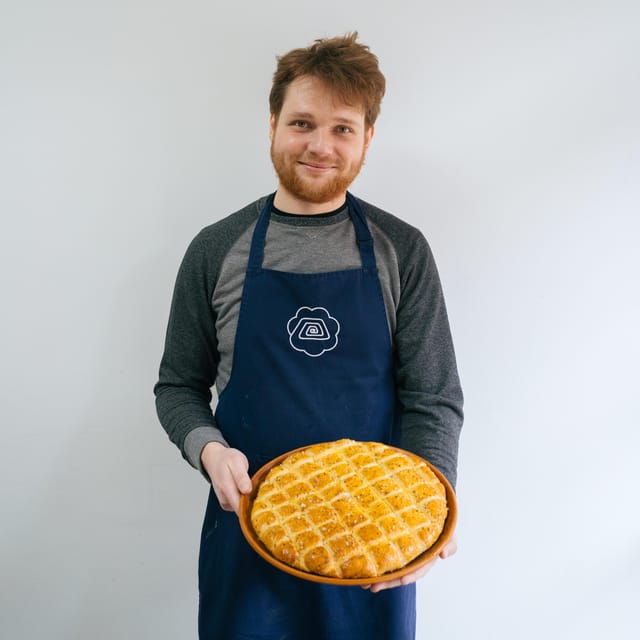
At $53 per person, the value depends on what you want from a two-hour activity. You receive a hands-on class, all necessary ingredients and equipment, an introduction to the bread’s cultural background, the chance to bake and taste your own Pogača, and drinks according to participant accounts.
That is a reasonable package for a small-group activity with an instructor who also spends time answering questions and discussing Slovenia. The bread itself is not an expensive food, but you are paying for the teaching, preparation, setting, conversation, and the chance to make it correctly.
I would consider the price especially fair if you are traveling as a couple, a family, or a small group seeking something beyond museums and walking tours. It can also work well as a birthday surprise. One parent received the class as a surprise during a birthday trip to Ljubljana and found it more interesting than expected.
The value is less obvious if you are only looking for a cheap snack or a quick cooking demonstration. In that case, $53 may feel high for bread. The real value comes from the cultural setting and the personal instruction.
Who will enjoy this cooking class most?
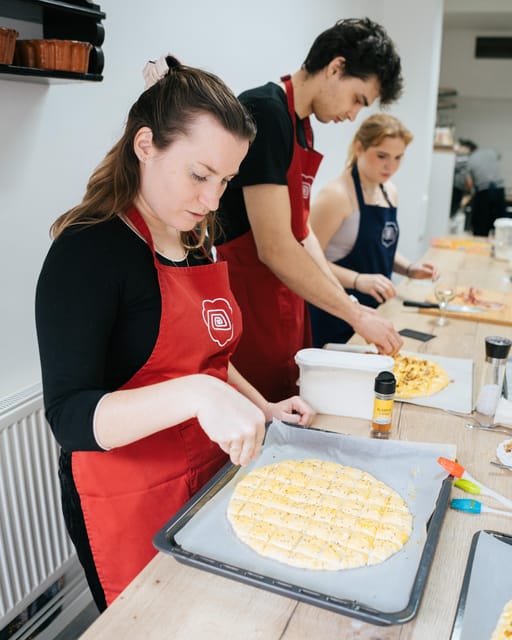
I would recommend this activity to several types of visitors:
- First-time visitors to Slovenia: You get food, local context, and conversation in one short activity.
- Couples: The hands-on format gives you something to do together, with a shared meal at the end.
- Families: Children and teenagers can take part, and Luka has been praised for working well with younger participants.
- Solo visitors: A solo booking may become a private class, making it easier to ask questions and set the pace.
- Food-focused visitors: You learn a traditional recipe rather than simply sampling a finished dish.
- People visiting Ljubljana: The location can be reached from the city center by bus, and the two-hour length fits neatly into a city break.
I would think twice if you dislike group activities, do not want to handle dough, or expect a full meal with several Slovenian specialties. You should also allow time to find the meeting point, especially if you are unfamiliar with the area.
Booking details worth knowing
The class lasts two hours, with starting times based on availability. It is offered in English and Slovenian, and the group is limited to 10 participants.
The activity is wheelchair accessible. That is useful information for planning, although the meeting point includes a passage through a building and a small square, so you may want to confirm the most convenient arrival route in advance if you have specific mobility needs.
You can cancel up to 24 hours before the activity for a full refund. The reserve-now-and-pay-later option also gives you some flexibility while arranging a Slovenia itinerary.
The experience provider is listed as Polak Tomaž. Participant accounts refer to Luka as the host and instructor, so he is the person to contact for afternoon parking assistance and practical arrival questions.
Should you book the Belokranjska Pogača class?
I would book this class if you want a friendly, local activity with real participation. The strongest reasons are Luka’s clear teaching, his easy English, the chance to hear about Slovenia while the bread rises, and the satisfying final taste of your own work.
The class is particularly appealing for families, couples, solo visitors, and anyone who likes food with a story. It also makes a clever birthday surprise because it feels personal without requiring a full day away from Ljubljana.
Book it with realistic expectations. You are not signing up for a long professional baking course or a large Slovenian feast. You are spending two hours learning one traditional bread, talking with a welcoming host, drinking Slovenian wine, and eating something warm that you helped make.
For $53, that is a solid choice for a small-group cultural experience. Just mark the fountain and clear window on your map, and do not leave the meeting-point search until the final minute.
FAQ
How long does the Belokranjska Pogača cooking class last?
The class lasts two hours.
How much does the cooking class cost?
The listed price is $53 per person.
What language is the class taught in?
The class is offered in English and Slovenian.
How many people can join the class?
The group is limited to 10 participants.
Is the cooking class wheelchair accessible?
Yes, the activity is listed as wheelchair accessible.
What is included in the price?
The price includes the hands-on class, instruction about the bread’s cultural background, ingredients, cooking equipment, baking, and tasting your own Belokranjska Pogača. Drinks were also offered during participant experiences.
Where is the meeting point?
The meeting point is in a small square surrounded by buildings, with a broken concrete fountain in the middle. The shop has a large clear window and can be reached near the old church, a Chinese restaurant, or through a passage near the bus stop.
Can I cancel or pay later?
You can cancel up to 24 hours in advance for a full refund. You can also reserve now and pay later.
Just added around Ljubljana
- Woop! Fun park with 21 attractions★ 4.6 · 3 reviews
- Private Zagreb Tour from Ljubljana★ 4.5 · 3 reviews
- Postojna Cave and Predjama Castle Tour from Ljubljana★ 5.0 · 3 reviews
- The Deadly Walk – Ljubljana Cemetery Tour★ 5.0 · 3 reviews
- Ljubljana: Interactive Workshop with Experienced Weaver★ 5.0 · 3 reviews
- Postojna Caves and Predjama Castle. Private trip.★ 4.5 · 3 reviews
- Introduction to the Specialty Coffee world in Ljubljana★ 5.0 · 3 reviews
- Full-day tour of Postojna Cave and Bled Lake From Ljubljana★ 5.0 · 3 reviews
Cooking Classes, compared.
Private Mediterranean Fish Cooking Workshop with Irena
Read our review →
Istria – Truffles: Hunting & Cooking & Tasting, Slovenia
Read our review →
Gažon – Istria: Truffles Hunting & Cooking & Tasting
Read our review →
Browse the lists this tour appears in