
Review · COOKING CLASSES
Private Mediterranean Fish Cooking Workshop with Irena
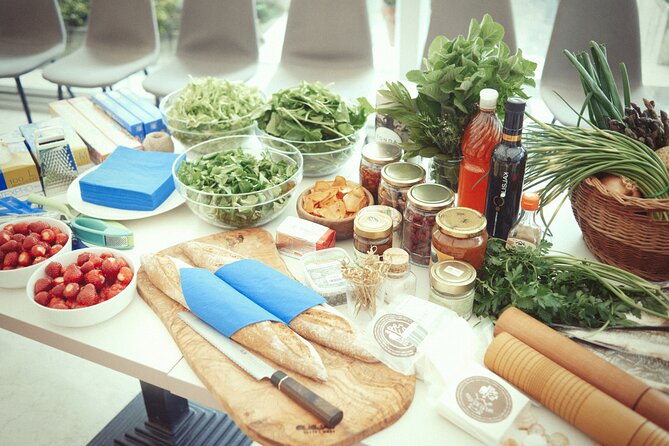
Fresh fish, sea air, and a meal you make yourself. This private workshop at Fonda Fish Garden near Portorož turns seafood cooking into a hands-on lesson about the Adriatic, sustainable fish farming, and local food traditions. I love the personal instruction from Irena, a molecular biologist and passionate cook, and I like that you eat the dishes you prepare beneath the pine trees. The main consideration is the price: at $199.55 per person, it makes the most sense for people who want a serious four-hour food experience rather than a quick cooking demonstration.
Irena’s teaching covers useful skills you can take home, from judging freshness to cleaning and filleting seabass. The setting is relaxed and personal, but fish handling is still hands-on, so this may not suit anyone uncomfortable working with raw seafood. Bad weather can also lead to cancellation.
In This Review
- Key things to know before booking
- Why this fish class feels different
- Starting at Fonda Fish Garden in Seča
- Seabass, mussels, and the hands-on work
- The meal you help create
- Piran, salt pans, and the wider coastal setting
- What makes the sustainability message useful
- Is $199.55 per person good value?
- Who will enjoy this most?
- Should you book the Fonda Fish Garden workshop?
- FAQ
- Where does the cooking workshop begin?
- Where does the activity end?
- How long does the workshop last?
- Is the workshop private?
- Is the workshop offered in English?
- What is included in the price?
- Is bottled water provided?
- Is alcohol included?
- Can I request a bottarga tasting?
- What happens if bad weather cancels the workshop?
Key things to know before booking
- You learn practical fish skills: Check freshness, clean and fillet seabass, prepare mussels, and make raw fish dishes safely.
- The setting is part of the experience: Cooking and eating under pine trees near the sea gives the class a strong sense of place.
- Irena leads the class personally: Her background in molecular biology and her concern for the sea add useful context to the cooking.
- Your group gets a private class: Only your own party participates, making it easier to ask questions and request adjustments.
- The meal is built into the lesson: Fish soup, sashimi, carpaccio, tartar, smoked seabass, pasta or mussels, a seabass main course, and dessert may appear on the table.
- The workshop lasts about four hours: Plan enough time for instruction, preparation, cooking, eating, and conversation.
Why this fish class feels different
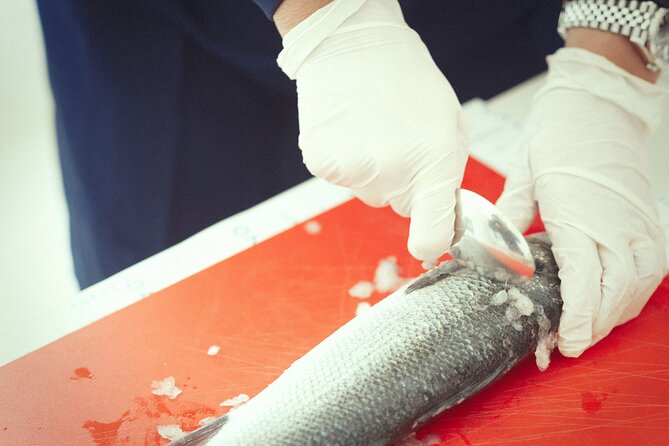
Many cooking classes give you a recipe, a quick demonstration, and a plate of food. This one begins earlier, with the fish itself. You learn how to recognize freshness, how to store and freeze fish, and how to handle seafood safely before you start cooking.
That order matters. A recipe cannot rescue poor ingredients or careless preparation. Irena’s approach connects the market, the sea, the kitchen, and the dining table. You do not simply learn how to cook seabass. You learn why the fish should be handled in a certain way and how its quality affects the finished dish.
The class is led by Irena, whose work as a molecular biologist gives her a scientific angle on food. She is also an advocate for responsible use of marine resources. Her teaching brings together cooking technique, fish biology, local culture, and environmental care without turning the class into a lecture.
The private format helps here. Your group can ask basic questions, spend more time on filleting, or request adjustments to suit your interests. It is a good choice if you prefer a conversation with one instructor over a large class where everyone must follow the same pace.
More cooking classes:
- Istria – Truffles: Hunting & Cooking & Tasting, Slovenia
★ 5.0 · 45 reviews - Ljubljana: Traditional Slovenian štrukelj Cooking Class
★ 4.9 · 58 reviews - Gažon – Istria: Truffles Hunting & Cooking & Tasting
★ 5.0 · 23 reviews
Starting at Fonda Fish Garden in Seča
The meeting point is Seča 142, 6320 Portorož, Slovenia, at Fonda Fish Garden. The activity begins and ends there, so you do not need to arrange a separate return point.
The opening is gentle. You begin with a glass of local wine or chilled water, which can be served with local herbs. The water is fresh tap water rather than bottled, reflecting the hosts’ effort to avoid unnecessary plastic. Alcohol is not included, but local white wine is available to buy.
Before the knives come out, Irena introduces you to the fish and seafood used during the class. This is where you learn the small checks that matter: how to tell if a fish is fresh, how to store it, and how freezing affects quality. These are useful lessons for anyone who cooks seafood at home, especially if you do not live near the coast and must buy fish a day or two before preparing it.
You may also hear about Fonda’s approach to fish farming and the couple’s concern for marine habitats. One especially useful part of the experience is the connection between responsible production and good cooking. The message is simple: careful treatment of the sea can produce better food.
Seabass, mussels, and the hands-on work
The main practical lesson focuses on seabass. Irena shows you how to clean and fillet the fish, then how to prepare it in a Mediterranean style. Filleting can seem intimidating at first, but a patient instructor and a whole fish make the process easier to understand than a pre-cut fillet ever could.
You should expect to handle the fish yourself. That is the point of the workshop, but it is also the chief reason to think about your comfort level before booking. If you are nervous around raw seafood, the class can help you become more confident, though it will not remove the hands-on part.
The menu also changes with the season. Mussels may be included when they are available. At other times, the class may prepare seafood pasta instead. This seasonal approach is a strength because it follows the local supply rather than promising exactly the same plate all year.
Raw seafood preparation is another important part of the lesson. You may work with sashimi, carpaccio, or fish tartar, along with instruction on safe preparation. This is not just a matter of slicing fish attractively. Temperature, freshness, cleanliness, and timing all matter, and the class gives you a better sense of why.
The seafood menu may also include smoked seabass and fish soup. These dishes give you different ways to understand the same main ingredient: a light soup, a raw preparation, a smoked appetizer, and a cooked main course. It is a good lesson in how technique changes texture and flavor.
The meal you help create
The sample menu begins with fish soup, followed by one or more raw fish preparations such as sashimi, carpaccio, or tartar. A smoked seabass appetizer may follow. Depending on the season, you may also prepare mussels or seafood pasta.
The centerpiece is seabass prepared in the Fonda style. You help make the meal, so the final lunch or dinner feels earned rather than simply served to you. A seasonal dessert made by Irena provides the finish and is included in the experience.
The setting adds plenty to the meal. After cooking, you gather beneath pine trees near the sea. That outdoor dining area gives the workshop a calm, unhurried feel. You are not being rushed out to make room for the next class, since this is a private activity for your group.
The meal includes lunch or dinner depending on your starting time, all ingredients, cookware, utensils, and recipes. Chilled water is unlimited. Local white wine can be purchased separately, so you can decide how much you want to spend beyond the workshop fee.
A small extra is Mediterranean caviar, known as bottarga. A tasting is available on request for 10 EUR per person. If you have never tried bottarga, it can add another distinctly coastal flavor to the lesson, but it is optional rather than part of the standard price.
More hands-on workshops:
- Ljubljana Stand-Up Paddle Boarding Lesson and Tour
★ 5.0 · 281 reviews - Lake Bled Stand-Up Paddle Boarding Lesson and Tour
★ 5.0 · 155 reviews - sLOVEnian Strukelj Traditional Cooking Class
★ 4.0 · 10 reviews - Everyday Yoga Class, Soča (Bovec)
★ 5.0 · 9 reviews
Piran, salt pans, and the wider coastal setting
The experience is connected with several places around Slovenia’s short but characterful coast. Piran is the best-known of them. Its compact old town, waterfront, narrow lanes, and Venetian influence provide a strong backdrop for understanding the region’s food culture.
Piran’s connection to the sea is not just decorative. Fish, salt, shellfish, and coastal trade have shaped local life for centuries. A seafood cooking class makes more sense after you have seen the harbor and the old town, even if your main reason for booking is the food.
The Sečovlje Salina Nature Park adds another useful piece of context. The salt pans show how coastal resources have been worked by hand and shaped into a local industry. Salt is one of the basic tools of seafood cooking, and the salt pans make that connection visible.
Thalasso Spa Lepa Vida is also part of the wider route. The spa uses the coastal setting and salt-pan environment for wellness treatments. It is a different kind of stop from the cooking class, so you should not expect it to replace the workshop or provide extra cooking instruction. It adds a slower, restorative element to a day focused on the sea.
Piran’s town walls offer views over the town and coastline. The climb may require a little effort, and the walls are not the main purpose of the cooking class, but they help you understand how compact the settlement is and how closely it sits beside the water.
The Aquarium Piran gives you another way to see local marine life. It is a useful companion stop for anyone interested in fish beyond the kitchen, especially families and visitors who want a broader look at the creatures found in the northern Adriatic.
Because the workshop itself takes about four hours, check how the coastal stops fit into your personal schedule. The cooking, eating, and instruction are the core of the activity. The other places add setting and context, but you should not assume that every stop receives a long guided visit unless that has been confirmed for your date.
What makes the sustainability message useful
The environmental side of the class is not an unrelated add-on. It appears in the way the hosts discuss fish farming, marine habitats, water, and seasonal ingredients.
The decision to serve tap water instead of bottled water is a small but clear example. It reduces plastic waste and makes use of Slovenia’s good-quality tap water. You can still order local white wine if you want it, but the basic drink service does not create extra bottle waste.
The seasonal menu also has practical value. Mussels are prepared when they are in season, and pasta may take their place at other times. This teaches you to adapt your cooking to what is available instead of treating a recipe as fixed.
The workshop can also help you make better choices at home. Learning how to judge freshness and store fish properly may reduce waste, while knowing how to fillet a whole fish can give you more control over the quality of your ingredients. I like that the environmental ideas are tied to ordinary kitchen decisions rather than presented as abstract slogans.
Is $199.55 per person good value?
The fee is high compared with a standard meal or a short demonstration. You are paying $199.55 per person for about four hours, but the price includes ingredients, equipment, recipes, instruction, and the meal you prepare.
The private format is the biggest value factor. If you are a couple, family, or small work group, you get the instructor’s attention rather than sharing the room with a large class. That matters most if you want to learn a particular skill, such as filleting or raw fish preparation.
The setting also adds value, though it is not a substitute for instruction. Cooking under pine trees near the sea, then eating the food you prepared, gives the day a strong sense of place. It feels more personal than a restaurant meal, but you should book it for the learning as much as for the scenery.
Wine costs extra, and bottarga costs 10 EUR per person if requested. These are easy costs to control. The included lunch or dinner, dessert, water, equipment, and recipes mean you do not need to keep adding charges to receive the main experience.
For a seafood enthusiast, the price can be reasonable. For someone who only wants a pleasant lunch in Portorož, it is probably too much. The value comes from the skills, private attention, and coastal setting.
Who will enjoy this most?
I would recommend this class to people who enjoy learning by doing. It suits home cooks, seafood fans, couples, families, and private groups looking for a shared activity with a meal at the end.
It also works well for team building. The group must prepare food together, communicate, and share the final meal. That gives the day a clear purpose without making it feel like a forced office exercise.
The class is a good fit if you want to understand Slovenian coastal food beyond restaurant menus. Irena also shares information about the region and its marine environment, so you leave with more than a set of recipes.
You may want to reconsider if you dislike raw fish, do not want to handle a whole fish, or prefer a passive food tour. The weather requirement is another practical concern. If poor weather forces cancellation, you are offered another date or a full refund, but that can disrupt a tightly planned holiday.
The activity is offered in English, and service animals are allowed. Confirmation arrives within 48 hours of booking, subject to availability. Since the experience is non-refundable and cannot normally be changed, make sure your date and group plans are firm before paying.
Should you book the Fonda Fish Garden workshop?
Book it if you want a private, hands-on seafood lesson that connects cooking with the Adriatic coast. I especially recommend it if you are unsure about handling fish, because the class is designed to make tasks such as cleaning and filleting feel manageable.
You should also book it if the setting matters to you. The meal beneath the pine trees, the local wine option, the seasonal dessert, and the attention to sustainable fish farming give the workshop a character that a normal cooking studio cannot match.
Skip it if you only want a quick tasting or a low-cost meal. At this price, you need to value the teaching and the time spent preparing the food. For the right person, this is not just lunch in Portorož. It is a practical lesson in choosing, handling, cooking, and respecting seafood.
FAQ
Where does the cooking workshop begin?
It begins at Fonda Fish Garden, Seča 142, 6320 Portorož, Slovenia.
Where does the activity end?
The activity ends back at the meeting point at Fonda Fish Garden.
How long does the workshop last?
The workshop lasts approximately four hours.
Is the workshop private?
Yes. Only your group participates in the private activity.
Is the workshop offered in English?
Yes. English is the available language.
What is included in the price?
The price includes lunch or dinner depending on the start time, all ingredients, utensils, cookware, recipes, and unlimited chilled water with or without herbs.
Is bottled water provided?
No. Fresh tap water is served by the glass. Bottled water is not used for sustainability reasons.
Is alcohol included?
No. Local white wine is available to buy separately.
Can I request a bottarga tasting?
Yes. Mediterranean caviar, or bottarga, can be requested for 10 EUR per person.
What happens if bad weather cancels the workshop?
If poor weather causes cancellation, you are offered a different date or a full refund.
Just added around Koper
- Flavours of Istria Tasting Experience from Koper★ 5.0 · 3 reviews
- Piran & Flavors of Slovenian Istria★ 5.0 · 3 reviews
- One guide – two ports – tours from Koper and Trieste★ 4.5 · 3 reviews
- Half day tour to Postojna cave – Private tour from Koper★ 4.0 · 3 reviews
- Wine Degustation in the Heart of Slovenian Istria★ 5.0 · 3 reviews
- Sip & Step: A Flavorful Walk Through Koper’s History★ 4.0 · 4 reviews
- Lipica Stud Farm- Private Experience from Koper★ 4.0 · 4 reviews
- Ljubljana Capital of Slovenia from Koper★ 5.0 · 4 reviews
Cooking Classes, compared.
Istria – Truffles: Hunting & Cooking & Tasting, Slovenia
Read our review →
Gažon – Istria: Truffles Hunting & Cooking & Tasting
Read our review →
Browse the lists this tour appears in